St. John Paul II, St. Maximilian Kolbe, & the Blessed Mother – Video
In this brief video by Sherwood Fellows the key themes of Lent are explored - th...
 Dr. Italy
In this brief video by Sherwood Fellows the key themes of Lent are explored - th...
In this 8 minute video, Marcellino D’Ambrosio, Ph.D. (Dr. Italy) shares so...
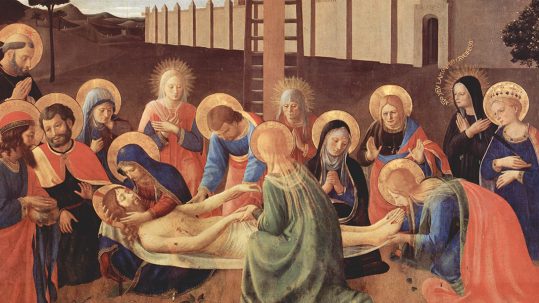
Bernard of Clairvaux on the martyrdom of the Virgin Mary at the foot of the cross – her heart is pierced by a sword as Simeon predicted. For the Fea...
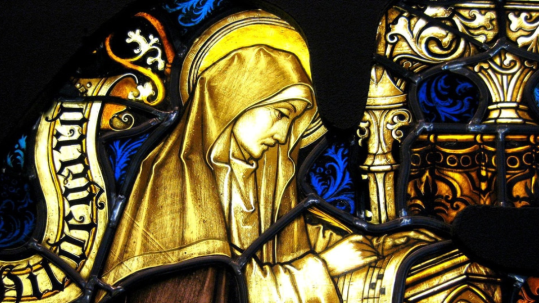
In this 14 minute podcast, Dr. Italy discusses the inspiring life of the great friend of St. Francis of Assisi, St. Claire. Her name means light or c...
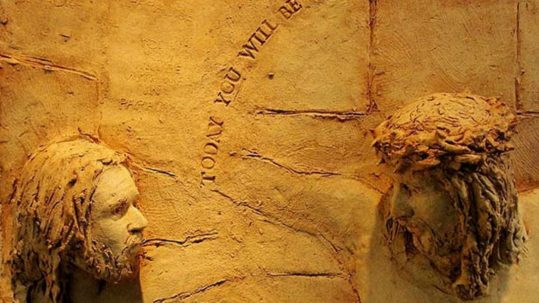
The parable of the workers in the vineyard is a shock to our sensibilities - some laborers work longer than others but at the end of the day, all get ...


St. Anselm was born around 1033 into the family of a Lombard landowner of Aosta, in the Piedmont regions of Northern Italy. In 1059 Anselm entered the monastic school of Bec in Normandy directed by Lanfranc, his fellow Northern Italian. As nearly all monasteries in Western Europe, Bec followed the rule of St. Benedict, the father of western monasticism. Anselm became a monk a year later and, in 1063, he succeeded Lanfranc as prior. In 1078 Anselm rose to abbot of Bec and was ultimately appointed Archbishop of Canterbury in England in 1093. In the history of theology, St. Anselm is accorded the distinction of being the first “scholastic” philosopher and theologian. Scholasticism is that theological movement in the Latin or Western Church which brought a rigorous application of logic to the reflection on the deposit of the faith. St. Anselm’s theological work is famous for his “ontological” proof for the existence of God outlined in his Monologion and Proslogion and his “satisfaction” theory of the atonement, outlined in his book Cur Deus Homo (“Why God became Man”). The latter can be recognized as the greatest contribution to the theology of the atonement (technically known as “soteriology”) in the Middle Ages. St. Anselm, the greatest intellect in the Latin Church between St. Augustine (d. 430) and St. Thomas Aquinas (d. 1274) died in 1109 AD. In the 18th Century Pope Clement XI declared him a “Doctor of the Church.” Biography by Dr. Italy